Historic voyage highlights the power of community college partnerships, hands-on learning, and ocean stewardship
MOUNT VERNON, Wash. — More than a year after departing Anacortes on an ambitious scientific and educational journey, the sailing vessel One Ocean is returning home after completing the historic Around the Americas Expedition.
The public is invited to welcome the crew as they arrive at Cap Sante Marina in Anacortes at approximately 5 p.m. on Tuesday, Aug. 11. Following the arrival, the celebration will continue with a community reception at the Anacortes Yacht Club, where guests are invited to meet the crew, hear stories from the voyage, and enjoy complimentary food and refreshments.
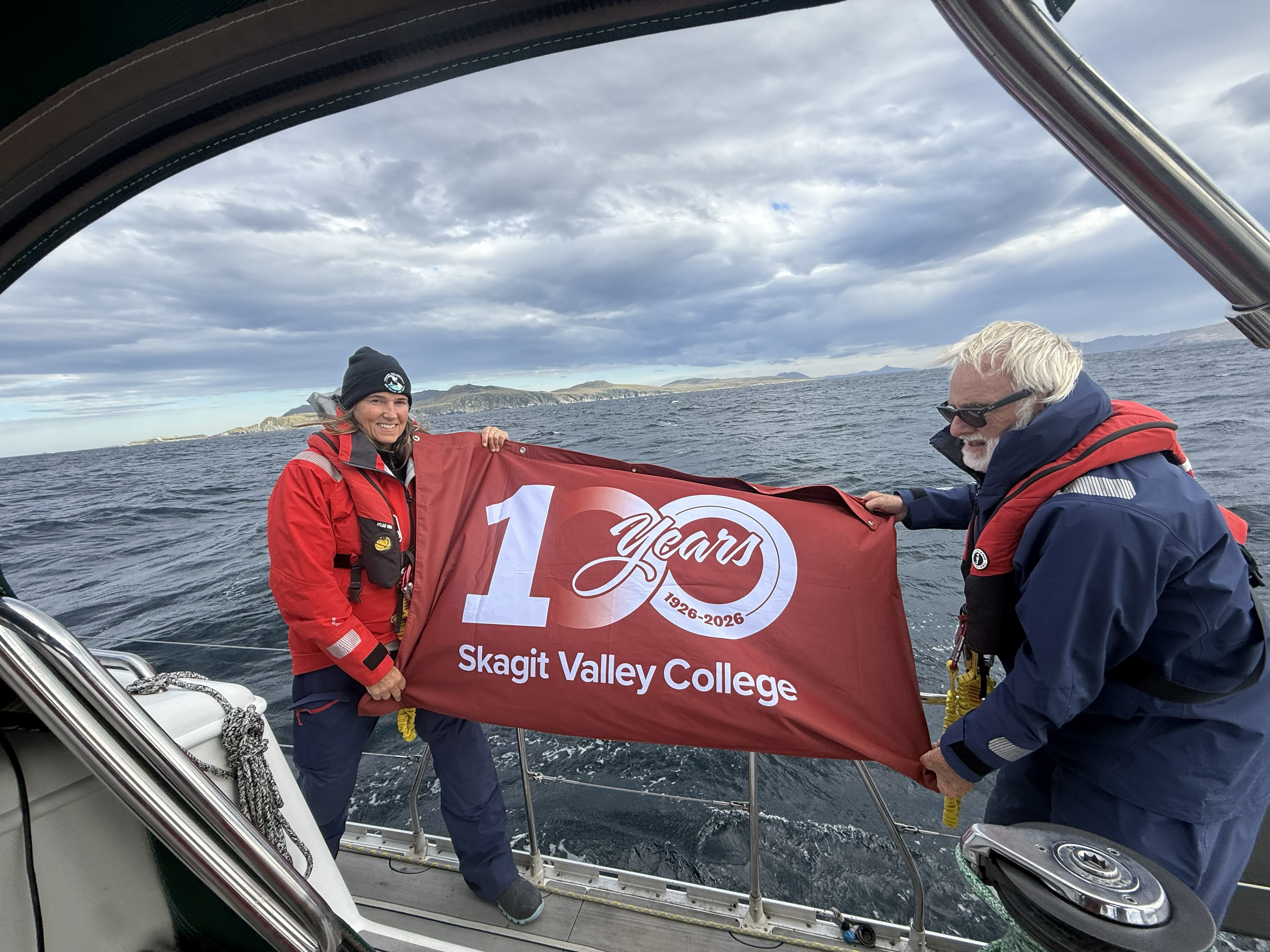
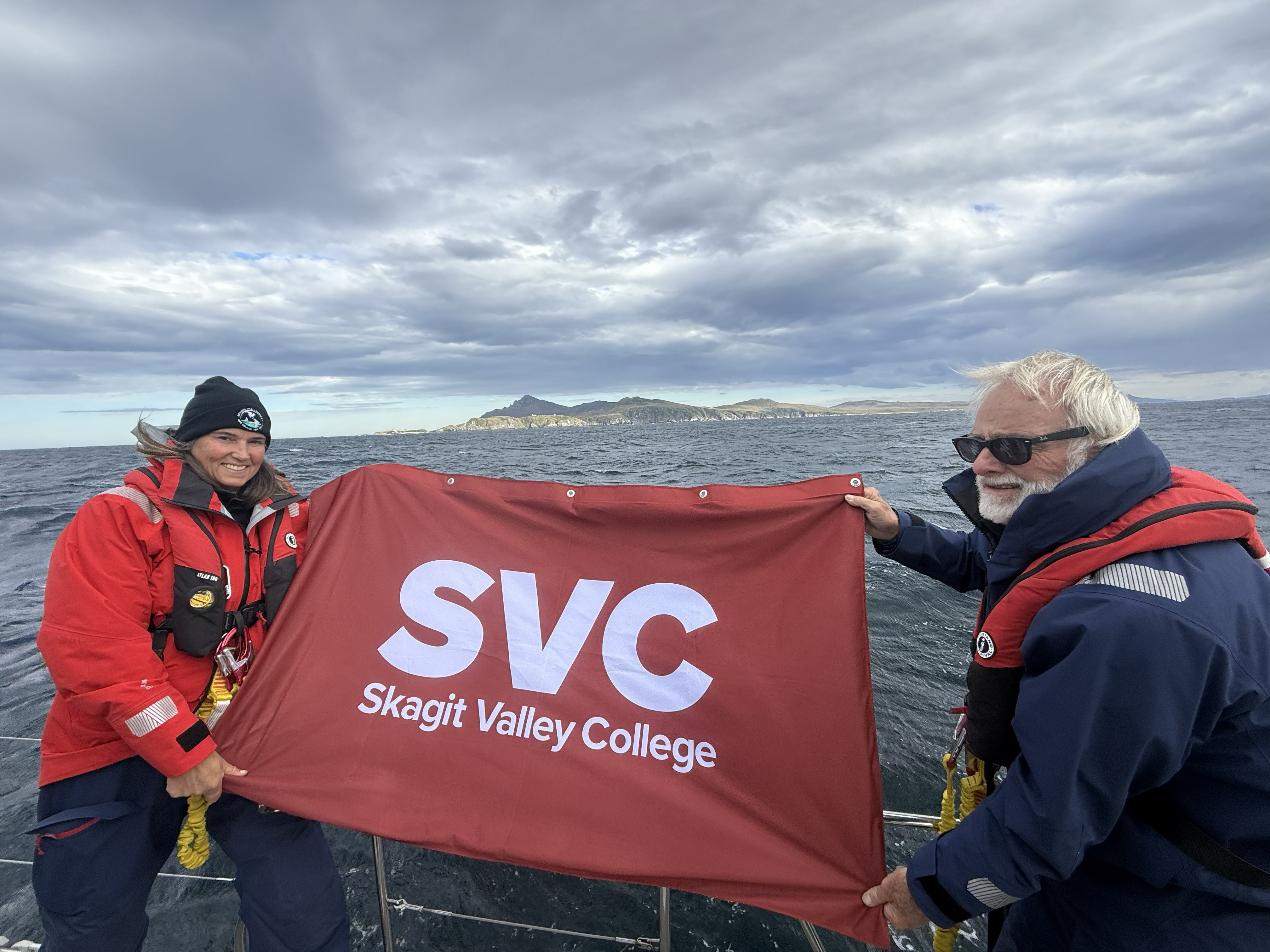
When One Ocean departed Anacortes in May 2025, it carried more than a crew bound for one of the world's most ambitious sailing expeditions. It carried Skagit Valley College's commitment to experiential learning, scientific discovery, and community partnership across more than 27,000 nautical miles of ocean.
"This expedition represents everything we hope our students experience: curiosity, collaboration, innovation, and service," said Dr. Thomas Keegan, president of SVC. "Through our Marine Technology program and the partnerships it has fostered, this journey demonstrates how learning extends far beyond the classroom and how local leadership can have a global impact."
The expedition grew from relationships built through SVC's Marine Technology program, where industry partnerships, applied learning, and environmental stewardship prepare students for careers on the water and beyond. Throughout the voyage, One Ocean served as a floating classroom and research platform, connecting education, science, and community engagement in ways that reached far beyond the Pacific Northwest.
Led by legendary sailor Captain Mark Schrader and co-captain and project director Jennifer Dalton, the expedition retraced the historic 2009-2010 Around the Americas voyage, returning to the same waters more than 15 years later to collect valuable comparative scientific data and better understand how our oceans are changing over time.
The crew partnered with scientists and research institutions, including the University of Washington's Applied Physics Laboratory, to collect oceanographic data, deploy research buoys, monitor marine wildlife, document kelp forests, and study sea surface temperatures, ocean currents, and changing marine ecosystems. Every mile sailed contributed to a growing body of research that will help scientists better understand our changing ocean.
Equally important was the expedition's educational mission.
Using satellite communications, crew members connected live with thousands of students across the United States, Canada, South America, Ukraine, and South Africa. Students followed the expedition in real time, asked questions directly from their classrooms, and explored marine science through firsthand experiences from some of the world's most remote waters.
The voyage also highlighted the remarkable talent growing in Skagit County.
Alongside Schrader and Dalton sailed lead marine biologist Grace Dalton and education outreach and social media coordinator Tess Schornack, both La Conner Elementary School alumni whose journey from local classrooms to a global scientific expedition reflects the opportunities created through education, mentorship, and community partnerships.
Throughout the expedition, the crew also collaborated with Indigenous communities, educators, researchers, volunteers, and coastal residents to exchange knowledge and better understand the interconnectedness of the world's oceans. Many of these partnerships grew through SVC’s Marine Technology program, reinforcing the college's commitment to hands-on learning and community engagement.
The expedition was guided by a simple but powerful message: One Island, One Ocean — the idea that every watershed, coastline, and community is connected through one shared ocean.
"Whether we were surrounded by Arctic sea ice, sailing beneath the cliffs of Cape Horn, or crossing nearly 4,000 nautical miles of open Pacific between the Galápagos and Hawaii, one lesson became clearer every day," said Captain Mark Schrader. "The ocean connects us all. There are no separate oceans. There is only One Ocean."
During the more than year-long voyage, the expedition:
- Sailed more than 27,000 nautical miles around North and South America.
- Successfully navigated the Northwest Passage and rounded Cape Horn.
- Conducted collaborative ocean research with scientists and research institutions.
- Deployed oceanographic research buoys to improve understanding of waves and ocean conditions.
- Documented kelp forests, marine mammals, seabirds, and coastal ecosystems.
- Connected with thousands of students through live virtual educational programs.
- Shared stories from remote communities that highlighted conservation, resilience, and environmental stewardship.
- Inspired communities around the world to recognize that every watershed ultimately flows to the same ocean.
The expedition's educational impact also extended online, where daily stories, photos, videos, and educational content from some of the world's most remote waters attracted nearly 25,000 followers, inspiring people around the world to become better stewards of our shared ocean.
While the voyage has come to an end, its impact is just beginning.
Over the coming months, expedition findings will be shared through public presentations, educational programs, podcasts, documentary filmmaking, classroom resources, and ongoing scientific collaborations. The research collected throughout the journey will continue contributing to a greater understanding of our changing oceans while inspiring future generations of scientists, mariners, educators, and environmental stewards. Learn more at https://oneislandoneocean.com/.
Welcome Home Celebration
SVC and the Around the Americas team invite the public to celebrate the successful completion of this historic expedition.
Crew Arrival
Tuesday, Aug. 11, 2026
Approximately 5 p.m.
Cap Sante Marina
1019 Q Ave.
Anacortes, WA 98221
Community Reception (Immediately following the arrival)
Anacortes Yacht Club
611 Rotary Park Lane
Anacortes, WA 98221
The reception will include complimentary food and refreshments, along with an opportunity to meet the crew, hear highlights from the expedition, and learn more about the scientific research, educational outreach, and partnerships that made the journey possible.
About Skagit Valley College Marine Technology
Skagit Valley College's Marine Technology program prepares students for careers in the maritime industry through hands-on training, industry partnerships, and real-world learning experiences. Located at the Marine Technology Center in Anacortes, the program offers instruction in marine maintenance technology and vessel systems while fostering connections with regional employers and community partners committed to advancing marine innovation, stewardship, and workforce development.
Media Contact Info
Marisa Pierce, Executive Director of Strategic Marketing and Communications
360.416.7957
marisa.pierce@skagit.edu